• Guest - w'd love to know what you think about the forum! Take the 2026 Survey »

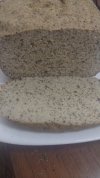
Gluten-free bread made in a bread machine.

M.A.R.

Well-Known Member
Messages
83
Type of diabetes
Prediabetes
Treatment type
Diet only
I bought a bread maker, which is a completely new experience for me. They were already being sold in Argentina in the 90s, but they were very expensive. Now they're cheap and cost about the same as a blender. The machine does everything: it kneads, lets the dough rise, and bakes it. I once tried making bread by hand and it turned out terribly: a brick! So this bread maker has been a lifesaver. The first thing I'm going to share with you, because I wouldn't want to die without writing down this flaxseed bread recipe, is this: Ingredients: You need 220 grams of flaxseed flour. I make it by grinding the flax seeds myself, so I'm sure I have fresh flour with all its properties. 50 grams of chia seeds and 50 grams of sunflower seeds. 8 grams of baking powder, 4 grams of active dry yeast, half a teaspoon of Ceylon cinnamon and half a teaspoon of ground ginger. 8 grams of psyllium husk, 4 grams of xanthan gum.

LIQUIDS: 6 large eggs, about 300 ml of lukewarm water or as needed. 300 ml of apple cider vinegar, 300 ml of olive oil.

Instructions: Place the beaten eggs in the bread machine pan, add all the liquids, then the flaxseed meal, psyllium husk, xanthan gum, spices, cinnamon and ginger, (salt to taste; I use pink salt), yeast, and baking powder. Select the kneading program. When the kneading program finishes, select the "Gluten-Free Bread" program and choose the weight (it's for a 1 kg loaf, although mine weighed 861 grams). Important: Halfway through the process, when the machine has completed the first rise, it will beep 7 times. This is the time to add the chia and sunflower seeds. If you add them at the beginning, they will be moist. If you add them after the first beep, they will be dry and crunchy. I hope you enjoy the recipe! I prepared it with someone with diabetes in mind. Cheers!
 

Attachments

  • Pan de lino.jpeg
    Pan de lino.jpeg
    100.1 KB · Views: 17
Thank you for that. It looks good.
Well done for working out the "translate!
 
Continuing with the "gluten-free bread" theme, I have a truly remarkable loaf—a four-flour bread—and I can assure you that it offers a flavor profile rarely experienced in the culinary world. I tried it myself, and while the taste is hard to define, it is absolutely delicious.
Here is the bread machine recipe for a 1 kg loaf.
LIQUIDS: 3 large eggs, 330 grams warm water, 2 tablespoons apple cider vinegar, 3 tablespoons olive oil.
SOLIDS: 80 grams almond flour, 80 grams coconut flour, 80 grams chickpea flour, 30 grams flax flour, 40 grams chia seeds, 2 tablespoons psyllium, 1 teaspoon xanthan gum, 1 gram salt, 2 teaspoons dry yeast, and 2 grams sugar.
PREPARATION: Place all the liquid ingredients into the bread machine pan, then add the dry ingredients. Select the "Gluten-Free Bread" program (which takes a little over 3 hours). Once the cycle finishes, remove the bread from the pan and let it cool before slicing.
 

Attachments

  • Multipan.jpeg
    Multipan.jpeg
    104.2 KB · Views: 6
  • Multipan 1.jpeg
    Multipan 1.jpeg
    114.9 KB · Views: 6
I found some important information here about bread and glucose levels; I just hope it's in English. I'm currently connected via a UK VPN and using a translator to convert my Spanish search terms into English so I can search in English. I also hope the source is reliable. Cheers!


Last edited:
Today I made a gluten-free bread using almond, chickpea, and coconut flours, adding a mucilage made from ground flaxseeds and chia seeds. I also used 4 eggs, olive oil, apple cider vinegar, psyllium, and xanthan gum. It doesn't look like bread—it looks more like a sponge cake—but it tastes delicious.
 
Since I started eating homemade bread, I've discovered that it not only nourishes you but also provides other benefits. For example, it improved my digestion. Google Translate sometimes makes mistakes, adding or changing a word and altering the entire meaning of the sentence.
 
Wheat-free bread made in a bread machine.

On September 8th, I ran a new bread test using 350 grams of flour. This time, I combined chickpea, soy, flax, and chia flours.

Liquid ingredients

3 medium eggs at room temperature

600 ml warm water (approx. 35°C)

25 ml olive oil

15 ml apple cider vinegar

Dry ingredients:
Flours — 350 grams total

150 g chickpea flour

80 g soy flour

60 g flax flour

60 g chia flour

Other ingredients

18 g psyllium powder

3 g xanthan gum

7 g dry yeast

7 g baking powder

6 g sugar

6 g salt

25 g sunflower seeds

10 g whole chia seeds

Cayenne pepper, black pepper, and plenty of oregano (added to taste)

Preparation in the bread machine

First, I lightly beat the eggs with the liquid ingredients and poured the mixture into the bread pan.

In a separate bowl, I mixed the four flours with the psyllium, baking powder, and salt. I poured this mixture over the liquids and placed the yeast and sugar in a small well on top.

I started by using the kneading program (Program 11). During the first few minutes, I used a silicone spatula to help incorporate the flour clinging to the sides.

The mixture absorbed more water than anticipated, so I added warm water by eye until I achieved a thick, very sticky paste. It did not form a ball like wheat-based dough does.

I had forgotten to mix the xanthan gum with the dry ingredients, so I added the 3 grams during the kneading process. The machine managed to incorporate it without any issues. Afterward, I added the seeds and seasonings. After kneading, I smoothed the surface with a wet spatula and immediately started program 7 for gluten-free bread, which lasts three hours. I then added 10 minutes of baking using program 15.

Result

The bread turned out compact and moist, yet fully baked with a fairly uniform crumb. It held its shape when sliced and did not fall apart. It weighed 1,244 grams.

It looks like a standard loaf of sandwich bread, with a crumb sturdy enough to hold up well when making sandwiches.
I sliced it before it had fully cooled because I was hungry. Even so, the result was excellent. The cayenne pepper, black pepper, and—especially—the oregano gave it a ton of flavor.
I tried it out by making a sardine sandwich, and it tasted even better.

Back when I was a kid, there was a black-and-white TV commercial for laundry detergent that featured the "Whiteness Challenge." In my case, what I look for in my bread is: 1) a crumb that doesn't fall apart when making a sandwich; 2) good digestibility; 3) great flavor; and 4) no spike in blood sugar... in my next post, I’ll show you "The Glucometer Test."
 

Attachments

  • Pan 1.jpeg
    Pan 1.jpeg
    122.3 KB · Views: 3
I wanted to test my glucose response to a meal, so I prepared two sandwiches: one with tomato and the other with sardines. The tomato weighed 118 grams; the sardines weighed 88 grams drained (with a net weight of 125 grams, though I consumed the oil from the can because it’s delicious). The bread (four slices) weighed 417 grams—yes, the same bread from the last recipe. Before taking the first bite, I measured my glucose and it was 130 mg/dL (7.2 mmol/L); exactly two hours after that first bite, it was 128 mg/dL (7.1 mmol/L). Here are photos of what I ate and the glucose meter reading.
 

Attachments

  • Glucometro antes de comer.jpeg
    Glucometro antes de comer.jpeg
    73.3 KB · Views: 3
  • Glucometro despues de la comida.jpeg
    Glucometro despues de la comida.jpeg
    68.4 KB · Views: 4
  • sandwiches.jpeg
    sandwiches.jpeg
    135.2 KB · Views: 4
You can also make bread - I have - with soaked chickpeas and psyllium husks. And, which I haven't yet tried, with lentils. There's a site called Ellavegan (google her) which provides such recipes. Many of my husband's family have coeliac disease and need to eat gluten-free, so they were delighted when I discovered the site!
 
You can also make bread - I have - with soaked chickpeas and psyllium husks. And, which I haven't yet tried, with lentils. There's a site called Ellavegan (google her) which provides such recipes. Many of my husband's family have coeliac disease and need to eat gluten-free, so they were delighted when I discovered the site!
Ms. Red Boots, I need to find out if canary seed flour is available on the market; it must be excellent for diabetics.
 
Ms. Red Boots, I need to find out if canary seed flour is available on the market; it must be excellent for diabetics.
I haven't heard of that one! I do know that the lower the GI, the more carbs we can tolerate (and, of course, many low GI carbs have loads of fibre, which is so important in our diet).
 
I haven't heard of that one! I do know that the lower the GI, the more carbs we can tolerate (and, of course, many low GI carbs have loads of fibre, which is so important in our diet).
Please, if the forum allows it, give me the address of that page where they publish bread recipes.
 
Back
Top