• Guest - w'd love to know what you think about the forum! Take the 2025 Survey »

The Good Old Days (not)

noblehead

Guru
Retired Moderator
Messages
23,618
Type of diabetes
Type 1
Treatment type
Pump
Dislikes
Disrespectful people
Recently, I have been thinking about the modern devices we have to hand to control and manage our condition.

When I was first diagnosed 27 years ago, the equipment given to control my condition seem primitive now. The only way of testing at home for glucose was by taking a sample of urine, which involved mixing some cystals, purified water and urine together in a test tube, and waiting for a colour to appear which would be orange for glucose, blue for negative. This was fiddly, time consumming and very inaccurate. Later I advanced to my very first blood glucose monitor, which compared to modern versions was 3x the size. Again this was fiddly, and not something that could be done in seconds like todays versions. First you would put a drop of blood onto the test strip, wait 1 minute then wipe off with a piece of cotton wool, insert into monitor then wait a further minute to see result, by which time if you were in bed you had fallen asleep!

The insulin pens we have today are far removed from the days of glass syringes and needles like nails. Keeping syringe in a plastic container full of surgical spirit to keep it clean, meant everytime it was used you had to pump out the surgical spirit until it was clear. Every week you had to boil the syringe in a pan of boiling water to sterilize; the needles which were given at the time were very long, bulky and painful to say the least. I remember having horrendous lumps under my skin, and would dread the next injection. Mixing both types of insulin together in the same syringe always resulted in air bubbles entering, which you could never get out and would waste the insulin drawn. The pen devices we use now are so much slicker, faster and accurate.

I suppose I could go on about so many things that have changed for the better, but I am sure you'll be bored by now, but I hope I have brought back a few memories here to some boarders, but I am sure they will share the same opinion that advancies in equipment for dealing with diabetes have come a long way.

Nigel
 
I remember those days with T1 husband too
Hana
 
I remember watching my Aunt back in the 70's holding up a vial and inserting a very large needle into it in preparation to do her morning injection. At the same moment my very needle phobic Dad walked into the kitchen, on seeing the needle he passed out on the kitchen floor with such force that she dropped the vial and it smashed, and she uttered some very profound words! Also remember watching with fasination the colour changing in the test tubes. I'm thankful for medical advances, i wouldn't want my son to have to go through all that.
Suzi x
 
I agree Suzi, and I suppose the treatment and equipment back then to which I am refering, would have been a lot more advanced that say 10-20 yrs before.

Nigel
 
I agree that blood testing devices have improved but I'm not a pen lover,since I've had some probs with different pens over the years. I use BD syringes, which are now considered old fashioned,but they have really small and fine needles,so no problems there.
Modern analogue insulins-I think big pharma need to go back to the drawing board :evil:
Animal insulin is now highly purified and less likely to cause the reactions it did in the old days and it works as insulin should! :D That's the best developement in my view.
Jus
 
I remember my Grandad (Pops bles him) using them syringes years ago when I was a child. When I got diagnosed T1 recently my Dad (who had insisted on taking me to hospital where they kept me in) and I were petrified when I was told as we both held these memories... we felt a little silly when the new versions were given to me!! :oops:
I'm glad it's moved on!! :D Great post... bought back memories!
 
Very interesting post, Nigel, thank you.
Makes me very grateful to be a diabetic diagnosed in 2008.
I'd be interested to read more of your "diabetic memories", if you feel like posting more!
 
Thanks Dobbs/yipster 29.

Pleased you enjoyed reading post. :)

Nigel
 
Thanks Nigel for starting this thread - I do have the odd nostalgic reminisce of 39 years of surviving (!) with Type 1 diabetes & I have enjoyed reading others recollections and experiences.

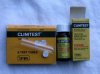
The Clinitest urine testing equipment was most definitely archaic and rather primitive - and so useless in many respects.
As Nigel recalled it was not easily portable (no wonder I got used to peeing in very public places!) My mother even made a towelling robe which covered my body – originally used to enable us to change in and out of swimming costumes whilst on the beach – it also became useful for providing a wee sample whilst under cover when we went out for the day! :lol: :lol: :lol: :lol: :lol:
The major flaw with the urine testing was that it did not take into account an individual’s renal threshold – the level at which glucose spills into the urine. Thus in some diabetics they would need a blood glucose (BG) level of 20mmols to produce glucose in wee and thus turn the Clinitest a brilliant orange colour – whilst another diabetic would have to be in a hypoglycaemic coma with a BG of 1mmol to register negative thus turning the Clinitest a blue colour.
I have to say a huge big thank you for the modern BG Meters which replaced the early ones – also not portable – largely the size of an average house brick and yep you most definitely nodded off waiting for the machine to provide a reading.
Some of the early models required manual reading with a colour chart again – similar to urine testing strips – very useful to record a BG of between 6 – 12 mmols (quite a wide variation there!!) and thus having to regulate insulin dosages. However when I first started nursing we used manual BG readings – the thought of that now just makes me shudder! :shock: :shock: :shock:

The fun thing regarding Clinitest tablets was that they made you "dead cool" amongst the other children particularly at primary school! :lol:
It was fantastic to have equipment in the house that stated “POISON CAUSES SEVERE BURNS” – and yes as a child I had complete access to it – an integral part of diabetes management being to induce self-management and independence!!
When school friends came around to the house we would place the Clinitest tablets at varying distances apart on the pavement outside and using water pistols attempt to hit the tablet – the child who won was the one who could hit the tablet at the farthest distance!! In addition with numerous water pistols fired simultaneously we could create multiple tiny volcanic eruptions as the Clinitest tablets fizzed & foamed on the pavement!!! :lol: :lol: :lol:
I can hear a terrible gasp of horror from health & safety! :shock: :shock:

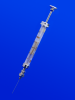
The stainless steel needles were barbaric :( :( compared to the modern BD Insulin Syringes and pen needles.
I kept my glass syringe in an enamel kidney dish between use – covering the methylated spirit, which the syringe bobbed about in – with tin foil. I remember having a special box – about 6 inches - long lined with lint and cotton wool which we used when we needed to take the syringe any were such as if I went to stay over night with grandparents.

Carb Counting was all the rage in 1970 – not entirely sure why it went out of vogue really. We had a carb card listing red portions and black portions and a list of free foods namely redcurrants and cheese!! :lol:
Huge excitement was generated when the doctor announced we could increase my carb allowance from 15 carbs for lunch to 20 carbs – I thought I had won the pools it was that exciting and it also indicated you were controlling your diabetes well!

I also recall when first attending a diabetic clinic here in London – 26 years ago – when the clinics used to take a BG reading whilst you were there. The blood was taken from your ear lobe!! :shock:
The theory was that as many diabetics lost their sight they would need to read Braille and using the tips of their fingers to take blood contributed to nerve damage – had the clinic not actually heard of neuropathy then?!
Gladly this practice was discontinued largely because in actual fact we should be stabbing the side of the finger amongst other body areas to obtain a blood sample for BG levels not the centre of the fingertips. Also it was nigh on impossible to take a blood sample from your earlobe without looking into a mirror and trying to coordinate stabbing the lancet in and getting the BG machine – the size of a house brick - up to the drop required the skills of a contortionist!! :lol: :lol: :lol:
Still it was funny to see all these diabetics sitting in the clinic with tissue stuck to their ear lobes!

Is there anything I miss from the good old days? Actually yes. :shock:

There were no NHS Government Health targets 40 years ago. :D :D :D :D
Admittedly there wasn’t for example any eye screening, diabetic nurse specialists or HBA1C’s then either but the no target approach was definitely positive.

I am determined to receive my 50 years on insulin medal – only another 11½ years to go!

Have included a couple of photographs from my archive – actually wished I had kept a few bits of my original diabetes kit!

Txx
 

Attachments

  • clinitest.jpg
    clinitest.jpg
    22.9 KB · Views: 960
  • Hypodermic Insulin Syringe 1960-1970.png
    Hypodermic Insulin Syringe 1960-1970.png
    71.9 KB · Views: 847
Wow, thats amazing! All the advances have made such a difference and the time span is actually not that long so it also gives us hope in further advances that will make a difference for us in foreseeable future. 8)
 
Kewgirl,

What can I say? -A brilliant post, absolutely brill !

Your recollection of equipment/treatment of years gone by is invaluable. I just couldn't remember the name of the urine equipment used, and you have come up trumps. As you have pointed out, the 'Clinitest' urine sampling equipment must have been the most inaccurate means of testing known to man.

I too remember the outdated practice of taking blood from the ear, which only showed the blood reading at that time, and did not reflect on the control the previous months. There were no Hba1c's as we know today. I also remember people walking out of hospital as I was walking in, and seeing pieces of cotton wool hanging from their ear and knew straight away that they had been to the diabetic clinic.

Do you remember how difficult it was to clear the glass syringe of methylated spirit. I would imagine with most injections we were injecting small amounts of meths with the mixed insulin.
Those pictures you have posted sent a cold shiver down my spine! The sight of the syringe, and the clinitest equipment evoked some painful memories, but no happy ones. I appreciate the advances of modern science today, lets hope that things will improve further to make our lives more comfortable and to increase longevity.

Anyway, thanks again Kewgirl.

All the best

Nigel
 
The picture of the glass syringe brought back memories of having to rapidly 'pump' it to get the spirit out, but if you got too enthusiastic the syringe would break down near the metal where the needle attached. Fortunately having done this a few times my parents decided it was worth buying me disposable syringes :roll:

I remember sometimes the buzz would go round in clinic that the hospital pharmacy had a supply of disposable needles for free. The doctor would whisper confimration in a conspiratorial manner, write a prescription, and there was a stampede from clinic to pharmacy. Oh the dispointment when you waited an hour in pharmacy only to find the needles were all gone!

I agree about the usefulness of urine testing but must admit I thought the Clinitest chemistry set rather cool. I doubt health & safety would allow it these days.
 
LittleSue,

I too use to buy the disposable syringes from my local chemist. These were meant to be handy for holidays and saved time on the cleaning process of the original glass syringe. Whenever I had any spare money, I would buy a couple of packets; each packet contain 10 syringes and cost around £4. :shock: I would use these more than once, more often until the needle was to painful to inject. I also remember cleaning the skin with cotton wool and meths prior to injection, and in a strange way I loved the smell of the meths!

Looking back, I must have spent a small fortune on disposable syringes, thankfully modern day pens and micro-fine needles are far less painful and troublesome.

LittleSue, I have just remembered, can you also recall the little disposable 'mini-swab' you could buy in chemist shops. These were used in hospitals for cleaning the skin prior to injections. I would buy these when I bought the disposable syringes, these were handy and came in boxes of 100, but I cann't recall how much they were. Occasionally, I would ask at my diabetes clinic for some freebies, and the nurse would hand me a few dozen. :wink:

Best wishes

Nigel
 
I was working as a nurse in London in mid 1980s, when HIV / AIDS appeared on the scene - I think that protest about the free issuing of disposable insulin syringes to prevent the spread of blood borne viruses among intravenous drug abusers, while those needing insulin to stay alive had to buy theirs was what eventually brought disposable syringes onto prescription. I've very pleased that by the time I developed type 1 diabetes, syringes & needles were free for insulin users - and pen devices are so much easier than syringes & vials, that I sometimes used to inject if inpatients with diabetes didn't want to do themselves.
 
Nigel,

I remember the little mini-swabs. Unfortunatley they brought me up in a rash so I only used them occasionally, eg taking away on holiday.

My parents used to send away to BD for a box of 100 syringes at a time. I don't think high-street chemists stocked them in those days. Don't know the amount, but my impression was they were very expensive and my parents were making a great investment for my health/convenience. The box was huge because each syringe was individually sealed in a paper envelope. They were 1ml syringes with a long needle attached. The sturdy box had a cardboard grid dividing it into 10 sections, each containing 10 syringes. After I got married we didn't have the money (or the storage space!) to buy that many, but could by then get a pack of 10 from the chemist in one little plastic bag, much more convenient. However, my self-employed hubby used one of the old boxes for years, with the sections labelled for petrol, phone bills, stationery etc it was easy to just stuff receipts in the appropriate slot each day and they were ready sorted for adding up at year end.
 
Back
Top