• Guest - w'd love to know what you think about the forum! Take the 2025 Survey »

Libre 2 readings are shockingly inaccurate

dkpiper

Newbie
Messages
1
Type of diabetes
Type 2
Treatment type
Insulin
I have been using a Libre 2 for two weeks, and have gone through three sensors. I had hoped it would help to control and understand my bg. Unfortunately the readings have been consistently off by over 50 mg/Dl in both directions, and has repeatedly issued low glucose alarms when my bg was 90-100. The alarms happen so frequently that I had to turn them all off, eliminating an important function.
I'm astounded that Libby continues to promote a device that has killed people, and will continue to do harm until it is removed.
Libby should be ashamed. Recall the entire product line until the device is proven to work reliably. Above all, there should be a black box warning not to trust the readings, and never calculate an insulin dose based on a Libby device.
 
Despite all quirks have found the libre sensor an invaluable tool alongside many others. 50m mg/dL is 2.8mmol/l. I've found them normally to be conistantly out by a little bit. eg reading of 5mmol i would be around 5.7-6mmol. fingerprick check a few times whilst graph shows as relatively stable (straight across arrow for 10 mins+). I've found they work better when keeping well hydrated. Also have found 'compression lows' if eg laying down in bed even sitting in a chair reads a little lower. Many users inclusive of myself have found they can read more accurately via 'pre soaking' ie inserting several hours before activating, i choose to insert the night before change, or first thing in the morning and activate just before bed.

It measures interestrial fluid and can lag behind by 10-15 mins from fingerprick glucose checks.

Something to bear in mind is accuracy of both your glucose monitor (usually to at least ISO 15197:2013 standard for both) 15% variance is generally considered acceptable within the usual target ranges.

Abbotts are usually pretty good at replacing sensors which malfunction and/or show vastly different readings.

I've had very inaccurate readings via fingerprick glucose checks in the past. Worked out was contaminant eg if washed hands and wasnt 100% dry would read lower *due to dilution*. same as if little bit juice or whatever could read higher. Found that wiping away the first droplet of blood then squeezing again helped to solve those.
 
Hi and welcome to the forum,

I’m sorry you have found a few libre2 sensors are not accurate for you.

With respect to your sentence about libre 2 sensors killing people I am not aware of any reports relating to that. Perhaps you are confusing it with a current warning on libre 3 sensors (a different version entirely) where there has been a recall on a batch of faulty sensors.

If you are aware of any deaths associated with the libre 2 can you give us your source please.

Abbott do state that in any circumstances where your feelings and experience do not match the sensor recording you should check with a finger prick before considering dosing.

I now use the libre2+ (libre 2 sensors have been phased out in the uk) and find it reads slightly under a finger prick test at low levels and slightly over at high levels. It can also dramatically drop if I lie on it in bed, causing what we call a compression low. If that happens I turn over and wait 10 mins before even considering a further test.
 
Millions of people use Libre sensors and find them mostly accurate and lasting for at least 14 days. The one recognised inaccuracy is in the first 2 or 3 days. Clearly as you have restarted 3 sensors in 2 weeks you have had quite a bit of time in this zone. I have used libre for 10 years, rarely had any failure.

Too much scare tactics in the press about deaths and failures but when millions of people are using Libre there are bound to be some POTENTIAL issues. The scary figures are not definite they are ONLY libre 3 &3+ Potential failures.

Check the actual warnings not just the media scare headlines!
 
Recall the entire product line until the device is proven to work reliably.
Please not!

I've been using Libre for over 8 years, and while I do sometime curse its shortcomings I wouldn't want to do without!
I've learnt to live with the inaccuracies and never leave the house without my fingerprick meter to double check if I feel the need.
I do extra fingerpricks the 2nd and 3rd day with a new sensor to 'get to know it', and to calibrate the 3rd party app I use for alarms. (Not the first day, for me the sensor behaves a little different on the first day so no use calibrating at this point.)

Using the Libre while being aware of when to doubt it has made it possible to keep my numbers safely in the non diabetic range, which I don't think would have been possible without constant access to what my bg is up to.

If it doesn't work for you, by all means stop using it, but please don't demand we all stop using it by asking them to recall the whole production line.
 
I for one would be furious to lose this product. It has its quirks, as said, the first day particularly. I always put on a day ahead which helps. But for me it is pretty accurate and as someone who has tested along side meters at the same time they don’t match either. People seem to think blood glucose numbers are written in stone. They are most definitely not from the experiments I have carried out.
 
I have found that the Freestyle Libre 2 plus sensor very unreliable and the readings very inaccurate as well. I have been using them on and off for years. They are very useful, but very inaccurate and I have had a 100% failure rate. The LibreLink App says replace the sensor, 365 error, anywhere between 8 hours and 12 days, not 1 has lasted 15 days and this is nothing to do with the sensor falling off as that very rarely happens to me.

I have found the blood tests a, plus or minus 15% to 30% difference. The accuracy is supposed to be at a Mean Absolute Relative Difference (MARD) of 9.2% in adults and 9.7% in children..... so well out for me and yes I know about the 15 minute difference.

I found the Freestyle Libre 1 a very good sensor, but for me the Libre 2 plus sensor just hasn't lived up to the 1 sensor, even though the 2 sensor has a lot more useful functions, like the Bluetooth monitoring connection.
 
Last edited:
You know if the Libre sensors have been accurate when you match it to your Hba1c results. Mine match.
 
I have found that the Freestyle Libre 2 plus sensor very unreliable and the readings very inaccurate as well. I have been using them on and off for years. They are very useful, but very inaccurate and I have had a 100% failure rate. The LibreLink App says replace the sensor, 365 error, anywhere between 8 hours and 12 days, not 1 has lasted 15 days and this is nothing to do with the sensor falling off as that very rarely happens to me.

I have found the blood tests a, plus or minus 15% to 30% difference. The accuracy is supposed to be at a Mean Absolute Relative Difference (MARD) of 9.2% in adults and 9.7% in children..... so well out for me and yes I know about the 15 minute difference.

I found the Freestyle Libre 1 a very good sensor, but for me the Libre 2 plus sensor just hasn't lived up to the 1 sensor, even though the 2 sensor has a lot more useful functions, like the Bluetooth monitoring connection.

I think maybe people expect too much of the technology. Ten years ago I discovered the libre (first generation so no 1) and found it made a massive difference to my life till allergies made it both unusable and inaccurate for me. (And to be fair to Abbott, they sent me new sensors and a new reader before it became apparent that my body was incompatible with that sensor).

I then moved to dexcom, and have managed to avoid the allergy situation with creams. Dexcom does have an advantage that you can calibrate it (potentially a big issue for me in the first 24 hours).

But both companies are using similar tech, so I think it's unrealistic to expect perfection. Neither can provide it.

Keep your glucometer on hand and recognise that an (occasionally) faulty cgm is infinitely better than no cgm at all. I still remember the days pre glucometer. Modern diabetes tech is wonderful.
 
I agree technology has moved forward a lot and it has become very useful. I have had diabetes for about 34 years and seen a lot of changes, but I do think technology is being pushed out when it isn't quite ready or the quirks are not explained fully. I have been a software tester for over 20 years and I know software is pushed out before it is ready........
 
I think it seems probable that not everyone has the same rate at which blood sugars enter the interstitial fluid, hence some people might see large variations at any given time between fingers prick readings and CGM readings. Giving the impression that the CGM device is inaccurate. In other words there could be big individual variations when one measures blood glucose between the two devices above and beyond the usual 15 min lag.

I see that as a more probable reason for some people finding CGM figures far out from finger prick readings than a quality control issue with GGM inaccuracy.


Ed for spelling and punctuation.
 
Abbott have always said that Libre is not suitable for everyone. However millions of us have found it a life changer. Unfortunately too many people do not read the Abbott instructions or the tips given on sites such as this to get around difficulties. It does take some work to use any tool. That is what Libre is : an extremely useful tool for millions of people to help monitor and control an extremely difficult issue.
Some may find alternatives better - OK use them but some alternatives can also be disastrous. The FDA files are full of issues with Dexcom for example. I consider some of the less regulated alternatives to be dangerous for me and others but I have learned to live with Abbott product. I do not yet use L3. L2 is adequate for my needs.

I do use JUGGLUCO.nl which gives more information and control if you work at it. I have also found it more reliable for connection with glucodatahandler and much easier to read levels on my watch. It also allows me to quickly see if issues arise with a new sensor and thus replace if needed but that is rare.
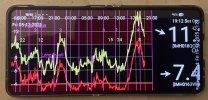
Here is an example of L2 with low readings. It is VERY obvious when compared with another sensor without relying upon questionable single readings from a fingerstick.
 

Attachments

  • IMG_7945.jpeg
    IMG_7945.jpeg
    731.8 KB · Views: 8
Last edited:
Maybe it isn't suitable for everyone, but Abbott market it heavily to everyone and claim an accuracy, MARD, of below 10%, so supposedly very close to the value a blood test would give, so it gives the impression it is very good.

It would appear from all the comments that maybe it isn't that accurate, certainly with some people. Just the other day I tested my blood against the Libre2 plus result and found it 1.1 mmol higher than the blood test. Now that could be a problem if the Libre 2 says 4mmol, when actually the value is 2.9mmol...... and if a person using it is losing their hypoglycemia warning signs.....

I have had a difference of about 2mmol before and the sensor quality checks, LibreLink App quality checks it self performs sometimes, didn't figure that out.

I find Libre 2 plus is just a rough estimate of my glucose level and just use it as a guide to which direction it is going.

But this is the Abbott marketing..."Easily know your glucose levels and where they're heading with our continuous glucose monitoring devices — no finger pricks"

So we all know that finger prick are still essential, but this is in the small print.
 
Back
Top