Hi
@Chook
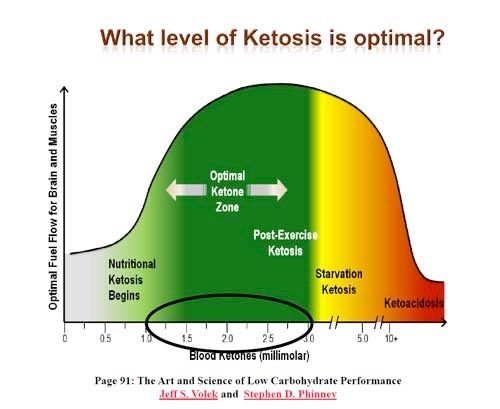
There is a huge difference between ketoacidosis, experienced by T1s, and ketosis (aka nutritional ketosis) experienced by T2s on a low carb diet. There is also starvation ketosis (don't know if that term is used by anyone other than me

)
Ketoacidosis is the one that T1s get warned about. It is very, very dangerous, and it happens in specific circumstances - basically when insulin is very low and glucose is too high). As i understand it - I'm not T1, so I cannot speak from experience - it leads to feeling like death, hospitalisation, rehydration, medication (insulin and anything else needed), and release when stabilised. If left untreated, it can kill. If there are any T1s who want to correct me, please do!
Starvation ketosis is when people dont eat (dieting, starvation, anorexia, etc) and the body runs out of glycogen reserves and starts breaking down fat and sometimes protein, to fuel itself. It happens to anyone who doesn't eat enough to fuel their body from the food. As the reserves are broken down, they release ketones. The ketones are used as fuel. People report 'fasting highs' and 'dieting highs' feelings of euphoria when they fast. I've been there. It was a good feeling, but i didn't have huge amounts of stamina. Since the body is not T1, it has enough insulin so that ketoacidosis doesn't develop.
Nutritional ketosis (I think the term may have been coined by Voleck and/or Phinney to distinguish it from the other 2 types mentioned above) is where carbs are reduced in the diet, glycogen (glucose) reserves in the liver and muscles are used up, and the body switches over to running on ketones released from the digestion of low carb foods, and bodily fat. Depending on how much is eaten, it can become starvation ketosis, or the ketones can be provided by a lchf diet. It all depends on what and how much is eaten. Again, it doesn't develop into ketoacidosis because the body produces enough insulin to prevent it.
Here is an image to describe the ketone ranges.
 @Chook
 your sig says T2, but you are at the top of the range for starvation ketosis, assuming the test is accurate, (those Ketostix are nowhere near as accurate as breath or blood tests for ketones). But may i suggest you keep an eye on it? And drink plenty of water, since that helps to flush away any toxic byproducts.
You also asked if it is an on/off switch.
@Spiker used to describe it as a dial, where the body moves from one fuel to another. My experience backs this up. Although i would add that it feels (for me) as if my body gets better and better at ketosis the more i am in ketosis. It is increasingly easy to run on ketones, and to switch back and forth. Think of it like this; i used to run on petrol, then i became dual fuel, but now i am mainly electric, and petrol (glucose) just makes me stutter and backfire...
As for whether it is good, long term... The studies aren't there. Yet. Opponents of low carbing always bring this up. But the evidence is growing (check out anything by Voleck and Phinney, they have been working, studying, publishing on LC, ketosis and endurance athletes for more than 20 years. It is an impressive body of work). Personally, i feel a lot worse running on glucose than on fat (ketosis), and i have been dipping in and out for 30 years now. So I will stick my neck out and say that ketosis is better
for me, long term, than stuttering, backfiring and aching 24/7, which i do when burning glucose.




