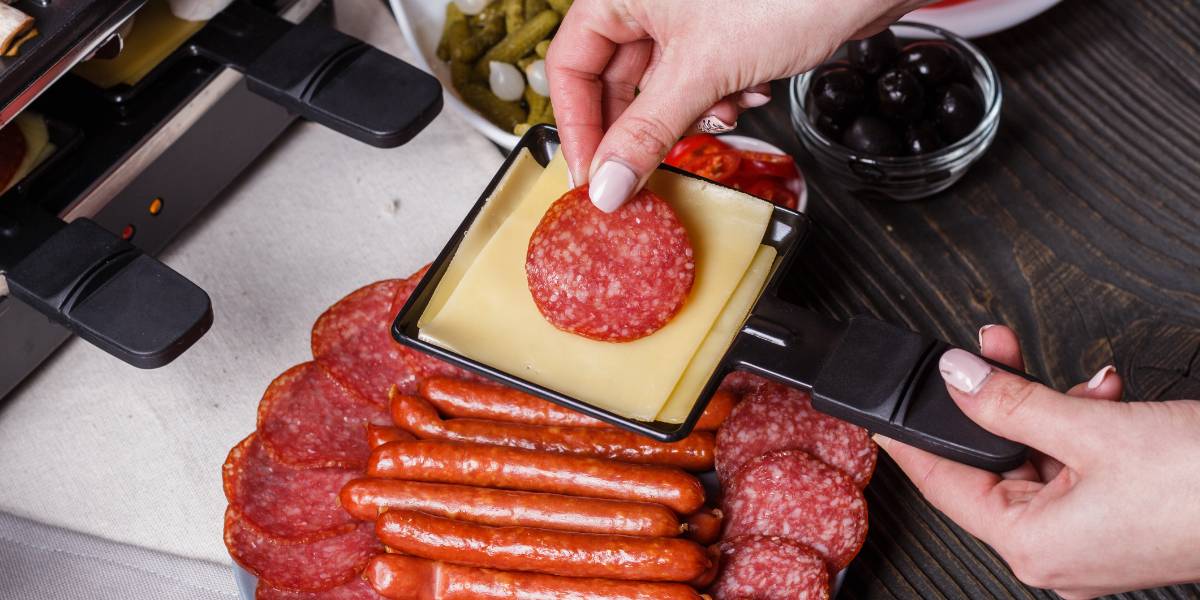

- Cured and processed meats can contribute to cancer risk through several pathways, including nitrite chemistry, heme iron, smoking and high-temperature cooking.
- The strongest evidence links regular processed meat intake with colorectal cancer.
- Plant-derived nitrates behave differently because they are usually eaten within a fibre-rich, antioxidant-rich food matrix.
Cured meats are often discussed as if the whole problem is nitrates.
That is too simple.
The cancer risk linked to processed meat appears to come from a combination of factors: nitrites, heme iron, smoking, charring, salt, processing methods and the overall food matrix.
Processed meat includes meat preserved by curing, salting, smoking, fermentation or similar methods.
That means foods such as bacon, ham, salami, sausages, chorizo and some deli meats.
In 2015, the International Agency for Research on Cancer classified processed meat as carcinogenic to humans.
The strongest evidence is for colorectal cancer.
That classification does not mean processed meat carries the same level of risk as every other Group 1 carcinogen.
It means there is strong evidence of a cancer hazard.
The chemistry is important.
Nitrates and nitrites can be transformed in the body into reactive compounds.
Under certain conditions, these can form N-nitroso compounds, some of which can damage DNA.
Heme iron from red meat may also promote formation of these compounds in the gut.
High-temperature cooking adds another layer.
Pan-frying, grilling, smoking and direct flame exposure can create substances such as heterocyclic aromatic amines and polycyclic aromatic hydrocarbons.
These compounds are also linked with DNA damage.
That is why the source and preparation method matter.
A vegetable rich in nitrate is not the same as cured bacon.
Nitrate and nitrite ions may be chemically identical, but the surrounding food matrix changes what happens next.
Vegetables bring fibre, polyphenols and vitamins such as vitamin C and E, which can reduce nitrosation and steer chemistry towards nitric oxide rather than harmful N-nitroso compounds.
This is why plant-derived nitrate has not shown the same cancer-risk pattern as processed meat in current evidence.
The “natural” label can also mislead.
Some meats cured with nitrate-rich vegetable extracts may still generate nitrite during processing.
So “no added synthetic nitrite” does not necessarily mean nitrite-free or risk-free.
For people with diabetes, processed meats also raise another issue.
They are often high in salt and may be part of dietary patterns linked with poorer cardiovascular health.
That matters because diabetes already raises heart and stroke risk.
- Ultra-processed foods may affect focus even in people with healthy diets
- Ultra processed foods may raise asthma risk in children
- Ultra-processed food intake linked to poorer thigh muscle quality
The most sensible advice is not panic.
It is moderation.
Processed meat should not be an everyday staple.
Fresh poultry, fish, eggs, pulses, tofu, nuts and minimally processed meats are better regular protein options.
Cooking methods matter too.
Avoid charring, reduce direct-flame cooking and pair meals with fibre-rich foods such as vegetables, beans, lentils and wholegrains.
This is not about demonising one food.
It is about recognising that processing changes biology, and some processed meats carry risks that cannot be explained away by calling them traditional, natural or high protein.


